Large Language Models are now a major entry point for information discovery. Users ask ChatGPT,…
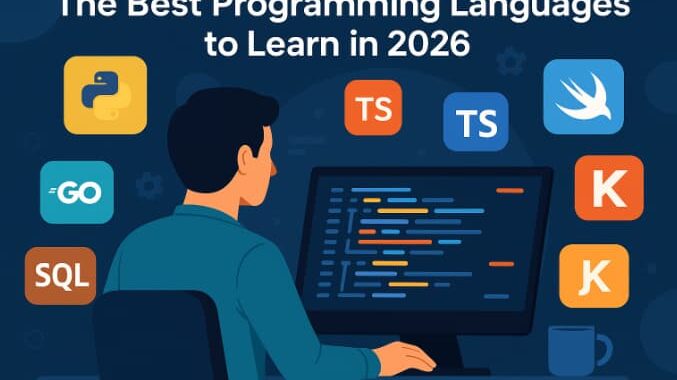
The Best Programming Languages to Learn in 2026
Technology isn’t slowing down. Companies across every industry are pushing deeper into AI, automation, cloud-native development, and data-driven products. If you want to stay competitive in 2026, your choice of programming language matters. Some languages are maturing, others are exploding in adoption, and a few newcomers are becoming serious contenders.
Below is a practical look at which languages are worth your time in 2026 and why they matter.
Why Choosing the Right Language Matters Now
Developers used to choose languages based on personal preference. In 2026, the landscape is shaped by:
- AI integration in nearly every product
- Growing demand for scalable cloud infrastructure
- A shift toward cybersecurity-ready development practices
- Cross-platform experiences that must work on mobile, web, and desktop
With these trends in mind, here are the languages that give you the strongest ROI this year.
1. Python — Still the King of AI and Data
Python isn’t going anywhere. If anything, its dominance has strengthened as AI workloads continue to expand.
Why Python Matters in 2026
- It powers most machine learning, deep learning, and automation workflows.
- Endless libraries: PyTorch, TensorFlow, FastAPI, Pandas.
- Startups and enterprises rely on it for quick prototyping and production-grade AI services.
Best Use Cases
- AI/ML systems
- Data engineering and analytics
- Automation and scripting
- Backend APIs
If you want to work with AI or modern analytics tools, Python remains the safest bet.
2. JavaScript & TypeScript — The Backbone of Modern Web Apps
Web development continues to revolve around JavaScript, and in 2026 TypeScript has fully taken over as the preferred choice for scalable projects.
Why TypeScript Is Essential
- Strong typing reduces bugs and improves maintainability.
- Works across frameworks: React, Next.js, SvelteKit, Vue, Astro.
- Expanding into backend development with Node.js, Bun, and Deno.
Best Use Cases
- Web apps (frontend + backend)
- Real-time applications
- Cross-platform web-native products
If you want to build anything for browsers or cloud SaaS, TypeScript sits at the top of the list.
3. Go (Golang) — The Cloud-Native Powerhouse
Go continues gaining ground because companies need extremely fast, reliable infrastructure for distributed systems, microservices, and DevOps tooling.
Why Go Matters in 2026
- Exceptional performance with minimal resource consumption.
- A favorite for Kubernetes, containerization, backend tools, and cloud platforms.
- Clean syntax and a quick learning curve.
Best Use Cases
- High-performance APIs
- Cloud infrastructure
- Distributed systems
- DevOps and automation tools
If you’re aiming for backend or cloud-native engineering roles, Go is one of the best investments you can make.
4. Rust — The Future of Secure, High-Performance Development
Rust’s growth has been unstoppable. Its reputation for memory safety without sacrificing performance makes it a top choice for systems programming.
Why Rust Is Booming in 2026
- Zero-cost abstractions and unmatched performance.
- Adopted by major players: Microsoft, Amazon, Cloudflare, Meta.
- Increasingly used for security-critical and high-performance systems.
Best Use Cases
- Systems engineering
- Cybersecurity tools
- Blockchain and cryptography
- Game engines
- High-performance backend services
Rust has a steeper learning curve, but the long-term payoff is big.
5. Java — The Enterprise Workhorse That Refuses to Die
Despite the rise of modern languages, Java remains a cornerstone in enterprise development.
Why Java Is Still Relevant
- Massive existing codebases across banks, telecom, healthcare.
- Modern Java (versions 21+) is faster, more efficient, and cleaner.
- Popular frameworks like Spring Boot continue evolving.
Best Use Cases
- Large-scale enterprise systems
- Backend development
- Android development (still widely used)
If you want stability and steady demand, Java delivers.
6. Kotlin — The Smart Choice for Android and Multi-Platform Apps
Google continues strengthening Kotlin as the primary Android language. In 2026, Kotlin Multiplatform is finally mature enough for production.
Why Kotlin Stands Out
- Clean syntax, fewer bugs, modern patterns.
- Lets teams share logic across mobile, desktop, even backend.
- Much faster development cycle compared to legacy Java.
Best Use Cases
- Android apps
- Multiplatform products
- Backend (Ktor)
If mobile development is your direction, Kotlin is the best long-term bet.
7. Swift — Dominating the Apple Ecosystem
Apple isn’t slowing down with Swift. Its performance, clarity, and ecosystem integration make it the only logical choice for iOS, macOS, and watchOS apps.
Why Swift Matters in 2026
- Heavily optimized for Apple hardware.
- SwiftUI has matured, making UI development far easier.
- Apple device market continues to grow globally.
Best Use Cases
- iPhone and iPad apps
- macOS apps
- Cross-device Apple ecosystem products
If you want to build for Apple users, Swift is essential.
8. SQL — The Underrated Skill You Still Need
SQL isn’t flashy, but it remains one of the most demanded skills across IT roles.
Why SQL Still Matters
- Every modern application reads and writes data.
- Even AI systems rely on structured data pipelines.
- Essential for analytics, backend development, finance, and BI.
Best Use Cases
- Database engineering
- Data analysis
- Backend systems
- Reporting and BI tools
No matter what language you specialize in, SQL will support your career.
Which Language Should You Learn First?
Here’s the no-nonsense breakdown:
- AI / Data → Python
- Web apps / SaaS → TypeScript
- Cloud / Backend → Go
- High-performance systems → Rust
- Enterprise → Java
- Mobile → Kotlin or Swift
- Data fundamentals → SQL
You don’t need all of them. Choose based on the type of products you want to build.
Final Thoughts
In 2026, the best programming language isn’t just about popularity—it’s about where the industry is moving. AI continues reshaping products, cloud-native systems are expanding, and cross-platform development is becoming the norm. If you pick one or two languages aligned with your goals, you’ll stay relevant and competitive over the next decade.
If you want, I can also create a shorter version for social media, a long-form SEO version, or a visual comparison chart.

Related Posts


This Post Has 0 Comments