Technology isn’t slowing down. Companies across every industry are pushing deeper into AI, automation, cloud-native…
The Best LLM Visibility Trackers in 2026
Large Language Models are now a major entry point for information discovery. Users ask ChatGPT, Claude, Gemini, and Perplexity questions they once typed into Google. As a result, companies need to know how often their brand appears in AI-generated answers, which domains get cited, and how visibility shifts over time. That is what an LLM Visibility Tracker measures.
Unlike traditional rank trackers that show your positions in Google SERPs, these tools monitor how AI systems reference brands, choose sources, and structure their responses. The data helps understand whether your content influences AI-driven search, how competitors appear, and where visibility gaps exist.
The best LLM tracking tools provide three things:
- reliable monitoring across major models,
- clear data on citations and mentions,
- competitive context that shows who dominates specific topics.
Below is an updated look at the leading options.
1. Sitechecker
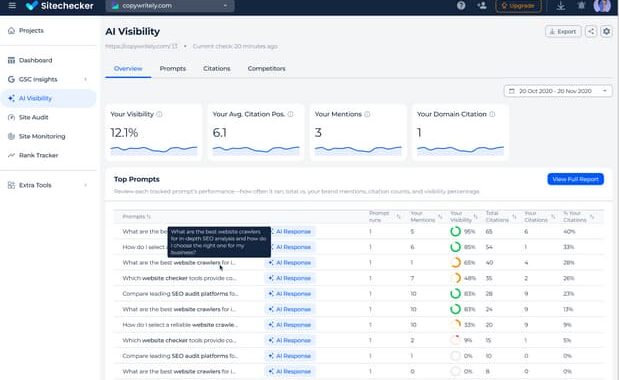
Sitechecker approaches LLM tracking with a level of detail most tools still lack. It focuses on practical analytics: how often a brand appears, which prompts trigger mentions, how citations shift over time, and where competitors stand. Everything is presented inside a unified dashboard that matches the workflow marketers already use for SEO.
What it does
Sitechecker generates several variations of a prompt for every keyword you track. This reflects the way real users phrase questions, making the visibility data more realistic. The system then runs these prompts multiple times to capture variation in AI responses. It measures:
- brand mentions,
- citation frequency,
- average position among cited sources,
- visibility across selected competitors.
You can open individual AI responses directly in the interface to see how the answer was formed and which domains influenced it.
The tool also supports brand variation tracking. If your brand can appear with different spellings, symbols, or spacing, Sitechecker identifies all versions automatically and attributes them correctly. This prevents missed mentions and produces more accurate visibility percentages.
Pros
- Strong prompt-level analytics with realistic question variations
- Clear citation breakdown for all runs of each prompt
- Competitor comparison with visibility trends on a single chart
- Brand variation tracking for misspellings and alternate formats
- Integrated ecosystem with Rank Tracker, GSC Dashboard, and Site Audit
- Useful alerts for visibility changes and new trends
Cons
- Multi-LLM monitoring is limited to ChatGPT and Gemini for now (others planned)
- No API yet for exporting raw LLM data
If your priority is dependable data and a clear picture of how AI systems talk about your brand, Sitechecker is the strongest choice. It offers deeper analytics than any other tool in this category and fits naturally into existing SEO workflows. The roadmap for broader LLM coverage makes it even more compelling.
2. LLMrefs
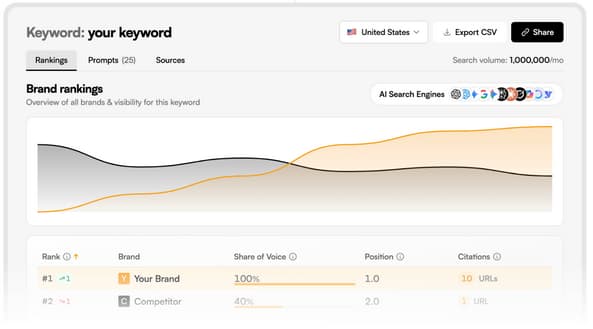
LLMrefs focuses on tracking raw mentions and citations across major LLMs. It supports ChatGPT, Claude, Perplexity, and Gemini, making it attractive for teams that want broad model coverage.
What it does
The tool runs selected prompts and records where a brand or domain appears inside AI answers. It provides weekly summaries, simple citation logs, and basic visibility scoring. LLMrefs does not aim to replace SEO platforms; it is built strictly for LLM-level monitoring.
Pros
- Covers multiple LLMs
- API access for exporting data
- Straightforward weekly reports
Cons
- Limited analytics depth
- No integration with SEO tools
- Minimal visual dashboards
LLMrefs works well for teams that only need raw citation and mention data. It gives a wide model overview but lacks deeper insights or visual interpretations.
3. RankLens
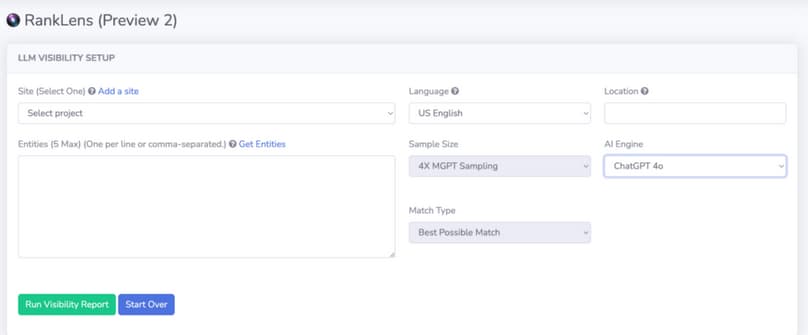
RankLens is part of SEO Vendor’s AI Suite and focuses solely on ChatGPT visibility. It attempts to capture variation by running a large number of prompt samples, giving users a broader view of how ChatGPT might respond.
What it does
The tool uses the MGPT sampling engine, which runs hundreds of prompt variations and gathers citation information from every response. This helps show how often a brand appears and which domains ChatGPT prefers to cite.
Pros
- Detailed sampling with up to 500 iterations
- Detects citations and references within answers
- Useful for early research into ChatGPT visibility
Cons
- Supports only ChatGPT
- No historical charts or annotations
- No API or collaboration tools
RankLens is suited for experimentation and initial analysis of ChatGPT behavior. It delivers useful data but lacks long-term tracking features and broader model support.
4. SE Ranking
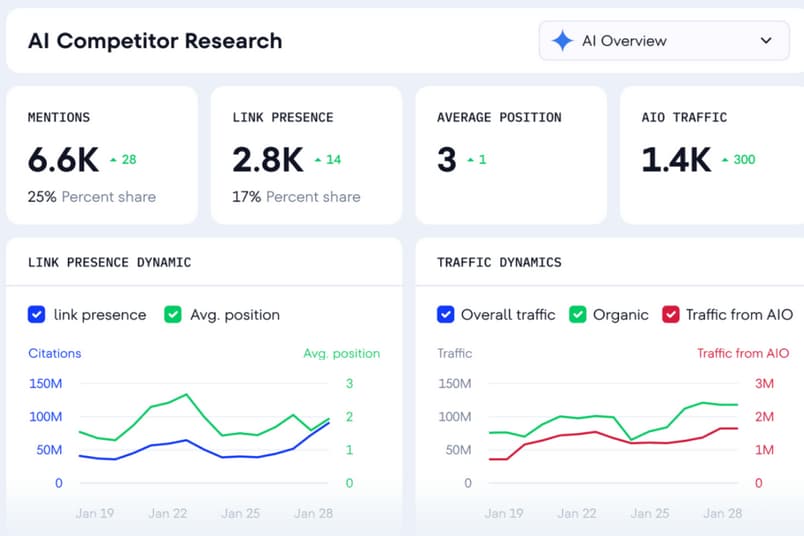
SE Ranking added an AI visibility module to its existing SEO platform. It shows how often a brand appears inside ChatGPT answers for selected keywords and integrates the results into the familiar SE Ranking dashboard.
What it does
The module provides simple visibility scores, weekly reports, and historical data depending on your plan. It is designed to complement traditional SEO metrics rather than replace them.
Pros
- Integrated directly into SE Ranking
- Historical visibility charts
- Easy setup for existing users
Cons
- Tracks only ChatGPT
- Add-on requires an active subscription
- No raw AI response export or API
This is a convenient add-on if you already use SE Ranking. It covers basic visibility needs but lacks the depth of specialized tools.
5. Nightwatch
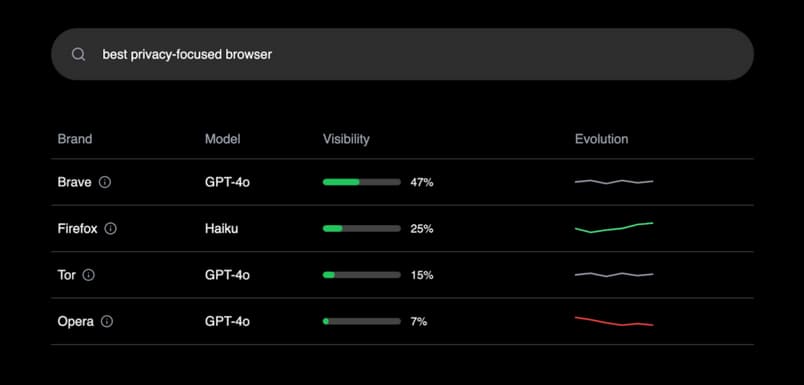
Nightwatch added LLM tracking as a beta feature inside its SEO suite. The tool monitors brand mentions in ChatGPT and Claude responses, displaying visibility changes over time.
What it does
The module offers time-based charts and simple competitive comparisons. It is still under development and currently limited in scope.
Pros
- Integrated into Nightwatch’s SEO dashboard
- Covers ChatGPT and Claude
- Includes daily keyword tracking for SEO
Cons
- AI module still in beta
- Limited analytics depth
- No citation details or raw AI response export
Nightwatch provides a lightweight LLM visibility layer for existing users but lacks detailed insights. It’s a supportive feature rather than a full tracking solution.
Final Verdict
LLM visibility tracking is becoming as important as monitoring Google rankings. Among the current tools, Sitechecker offers the most reliable and actionable approach. Its prompt-level analytics, citation tracking, competitor comparisons, and brand variation analysis make it the most practical choice for businesses that want a clear view of their presence across AI-generated answers.
Other platforms provide partial visibility or early-stage features, but none match Sitechecker’s depth, workflow, or usability.

Related Posts


This Post Has 0 Comments