Although Apple is in the process of migrating its computers from Intel's x86-compatible processors to its own chips with Arm architecture, the company seems ready to work with other promising architectures. In particular, it has begun the search for a high-performance programmer (or programmers) capable of working with RISC-V.

Top 6 Salesforce Development Companies for Complex CRM Implementations
Walk into any mid-sized or larger company these days and you’ll likely find Salesforce running somewhere. Sales teams live in it. Marketing departments build campaigns there. Customer service logs cases and tracks resolutions. The platform has become this quiet giant sitting underneath how businesses manage relationships. But here’s the reality nobody talks about at the start: implementing Salesforce rarely goes according to plan.
The platform itself works fine. It’s everything wrapped around it that causes headaches. Connecting Salesforce to legacy ERP systems. Pulling data out of old CRM platforms without losing years of history. Getting salespeople to actually use the thing instead of their spreadsheets. According to our analysts, these challenges push organizations toward partners who offer salesforce development services and understand that CRM implementation is 30% software and 70% everything else.
Why Complex Implementations Derail
You’d think after thousands of Salesforce projects, companies would have figured this out. They haven’t. Projects launch with optimism and realistic timelines, then slowly go sideways. We’ve watched it happen across manufacturing firms, financial services companies, healthcare organizations. The patterns repeat:
- CRM data migration reveals years of messy, inconsistent records;
- Integration planning assumes legacy systems will cooperate;
- Customization spirals as business units demand different things;
- Internal teams lack hands-on Salesforce experience;
- Global deployments hit regulatory and infrastructure walls.
These factors force companies to bring in outside help. According to our data, organizations that try to go it alone on complex implementations usually regret it.
Partner Categories in the Salesforce Ecosystem
The Salesforce partner landscape isn’t one monolithic thing. You’ve got firms that eat, sleep, and breathe nothing but Salesforce configuration. Then you’ve got enterprise software shops that treat CRM as one component in broader digital transformation. Both can work. Both can fail. It depends on what you’re trying to build:
- Full-stack enterprise engineering firms with Salesforce practices;
- Boutique consultancies focused purely on CRM;
- Integration specialists who connect platforms;
- Cloud infrastructure partners who handle the underlying environment.
Match the firm to the problem. A specialized shop might nail your Sales Cloud configuration but struggle with complex ERP integration. A giant engineering firm might over-architect a straightforward implementation.
1. Avenga
Avenga operates across geographies as a software engineering outfit serving enterprise clients. Their sweet spot involves digital transformation initiatives, large-scale custom development, and CRM implementations that actually scale.
Avenga provides salesforce development services for organizations building CRM ecosystems that need to grow over time. They employ roughly 6,000 specialists globally with offices scattered across Europe, North America, and Asia.
The team tackles Salesforce integrations, builds custom components, and modernizes CRM systems that have grown creaky over years of use. They do not treat Salesforce as an isolated purchase and instead look at how it fits into existing application portfolios. That broader view matters when you’re stitching together dozens of enterprise systems.
Salesforce Focus Areas
Avenga concentrates on several Salesforce capabilities. Their project history shows consistent patterns:
- Custom Salesforce application development;
- Salesforce platform integration with other systems;
- CRM architecture design and planning;
- AppExchange product creation;
- Salesforce consulting and roadmap development.
These offerings help organizations build CRM infrastructure that doesn’t collapse under its own weight. We’ve seen too many customizations that worked at launch but became maintenance nightmares.
2. Intellias
Intellias describes itself as a software engineering company with deep roots in digital transformation. They assist businesses in modernizing outdated CRM systems and embedding Salesforce into corporate technology stacks. According to our tracking, they maintain over 92 Salesforce certifications spanning Sales Cloud, Service Cloud, Marketing Cloud, and Commerce Cloud. That breadth suggests they’ve seen varied implementations.
The firm concentrates on integration challenges and making Salesforce communicate with existing enterprise applications. They have handled numerous migration projects where years of accumulated customer data must be cleaned and moved without disruption.
3. N-iX
N-iX functions as an international software development operation with significant cloud and enterprise expertise. Their capabilities cover cloud engineering, enterprise software construction, and digital transformation programs. Partner relationships with AWS, Google Cloud, Microsoft, and Salesforce indicate their technical range. Reference clients like Siemens and Lufthansa suggest comfort with demanding environments.
In N-iX projects, Salesforce typically needs connection to other business platforms. They approach CRM as one element within larger technology ecosystems rather than a standalone purchase. That integration emphasis distinguishes their work.
4. SoftServe
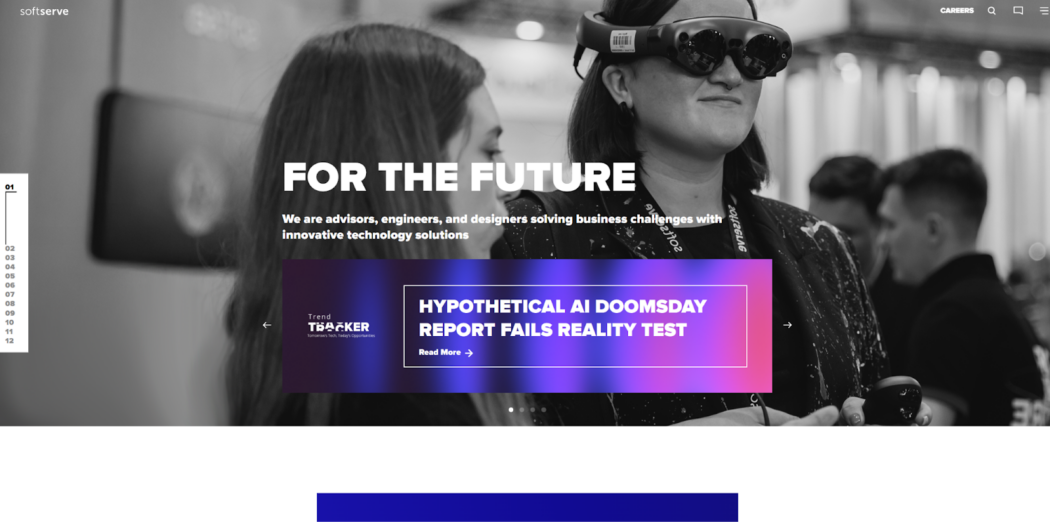
SoftServe operates globally as an IT company with recognized strengths in cloud computing, artificial intelligence, and enterprise platform work. They assist organizations implementing CRM solutions and rethinking how customer data flows through businesses. According to our observations, they excel at combining Salesforce with data engineering capabilities and AI systems, capabilities that matter as companies expect more intelligence from their CRM investments.
The firm guides clients beyond basic Salesforce adoption toward more sophisticated applications. They emphasize automation, analytical capabilities, and how CRM fits into comprehensive digital strategies rather than isolated departmental tools.
5. Soliant Consulting
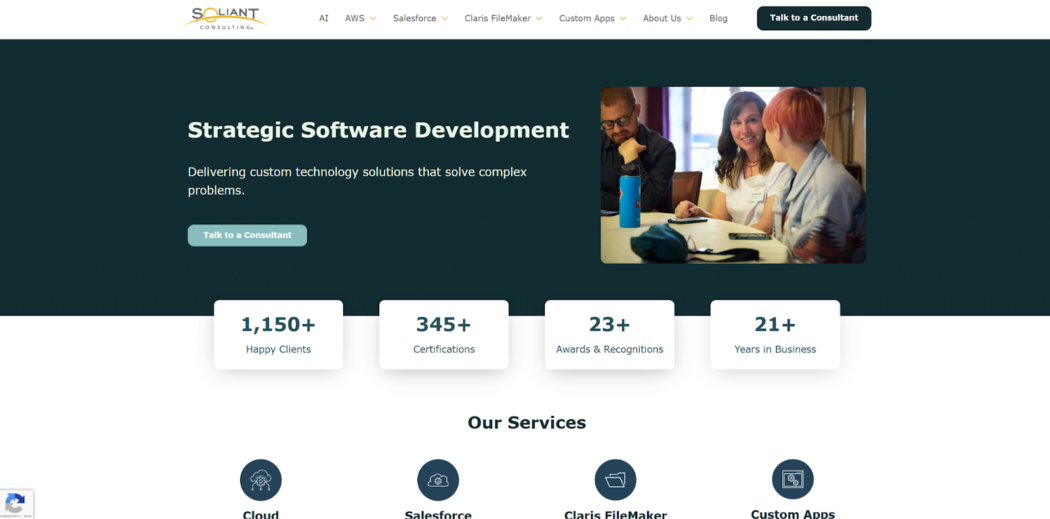
Soliant Consulting concentrates exclusively on Salesforce work. No platform diversification and no chasing adjacent markets, just CRM implementation and optimization. Based in the United States, they serve organizations seeking pure Salesforce expertise without the overhead associated with large engineering consultancies.
The firm specializes in CRM optimization and improving existing Salesforce instances. According to our information, they’re particularly effective at rescuing implementations that veered off course and restoring platforms to productive use.
6. Algoworks
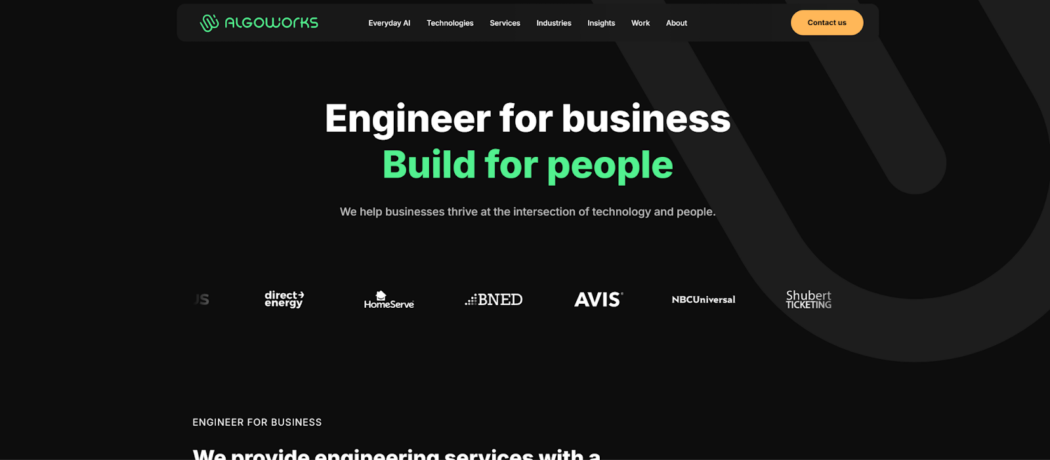
Algoworks operates globally as a Salesforce partner with implementation experience across Sales Cloud, Service Cloud, and Marketing Cloud. They deliver Salesforce development, CRM consulting, cloud integrations, and managed services for organizations preferring not to build internal teams from nothing.
The company engages with various Salesforce products, helping clients implement, customize, and sustain their CRM systems over extended periods. They represent the type of partner you engage when requiring consistent, reliable Salesforce support across multiple years rather than project-based assistance.
Partner Evaluation Criteria
Selecting a Salesforce partner requires looking beyond marketing materials and certification counts. Technical skills matter, certainly. But according to our analysts, relevant experience carries more weight. You need someone who has encountered your specific challenges before and knows which approaches actually work. Consider these factors:
- Proven Salesforce project experience within your industry sector;
- Count of certified Salesforce professionals assigned to your work;
- Demonstrated integration capabilities with your existing systems;
- Industry-specific knowledge applicable to your context;
- Post-implementation support structure and commitment.
These considerations help identify partners suited to your particular situation. Generic evaluation frameworks miss what truly determines project success.
Conclusion
Salesforce offers genuine potential for improving how companies manage customer relationships. But potential alone accomplishes nothing without proper implementation. You cannot purchase the software and expect transformation to follow automatically. Complex CRM initiatives require experienced teams who have witnessed both successful and failed implementations.
Organizations including Avenga, Intellias, N-iX, SoftServe, Soliant Consulting, and Algoworks bring distinct approaches to Salesforce development. Your responsibility involves determining which approach aligns with what you’re actually constructing. Make that determination correctly, and your CRM becomes operational asset rather than ongoing expense.

Related Posts